Stress fractures in the foot are common but often overlooked, particularly among athletes and active individuals. They can cause significant pain and disrupt daily activities like walking, running, and sports. For example, a runner may dismiss foot pain as post-run soreness, only to find it worsens with each stride, making routine tasks difficult. Recognizing the symptoms, understanding how stress fractures are diagnosed, and knowing the best treatment options are crucial for early identification and faster recovery. This article provides key insights into stress fractures, including symptoms, causes, treatment, and prevention.
Table of Contents
What Is a Stress Fracture?
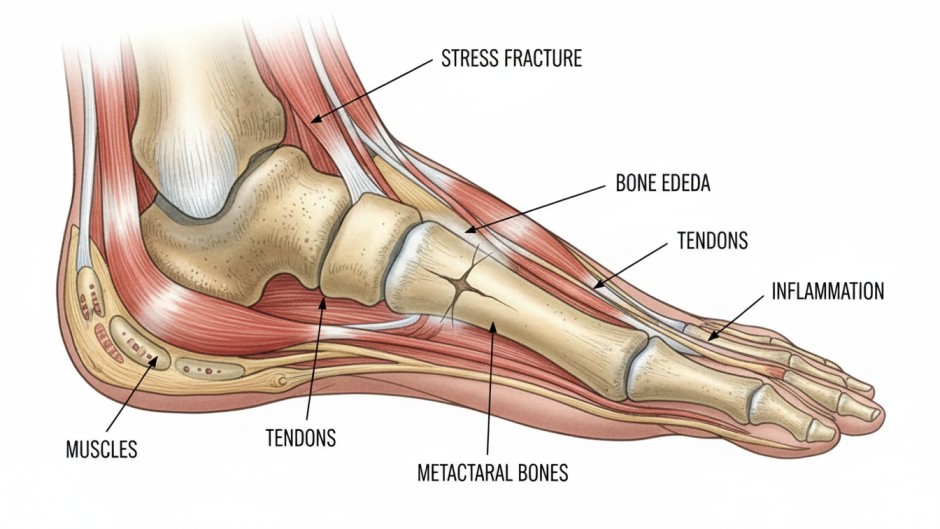
A stress fracture is a small crack in a bone that results from repetitive stress or overuse. Unlike fractures caused by a traumatic injury, stress fractures develop gradually due to the repetitive application of force to the bone over time. Stress fractures are most commonly seen in weight-bearing bones, such as the legs and feet, because these bones absorb the majority of the body’s weight during movement.
In the foot, stress fractures typically affect bones such as the metatarsals (the long bones in the midfoot), the navicular bone (found in the top of the midfoot), and the calcaneus (heel bone). These fractures develop when the bone’s ability to withstand stress is exceeded due to overuse or increased activity. The body’s normal process of bone remodelling (where bone tissue is broken down and rebuilt) can’t keep up with the increasing demands placed on it, leading to microcracks, which eventually develop into a stress fracture.

How Does a Stress Fracture in the Foot Feel?
The experience of a stress fracture in the foot can vary depending on its location, severity, and duration. However, several key symptoms are commonly associated with this type of injury. Let’s explore the typical signs and what they feel like.
1. Pain That Worsens with Activity
The hallmark of a stress fracture is pain that worsens with physical activity. Initially, you may notice mild discomfort in your foot after engaging in high-impact activities such as running, walking long distances, or playing sports. However, as the fracture progresses, the pain intensifies and becomes sharper or more localised. This pain is often more pronounced when you put weight on the affected foot, making it difficult to walk or engage in your usual activities.
Unlike general muscle soreness or fatigue, pain from a stress fracture does not improve significantly with rest or stretching. As you continue to put stress on the affected area, the pain will increase, making it challenging to continue physical activity. Resting the foot temporarily eases the pain, but it will return once you resume your normal activities.
2. Tenderness to Touch
Another characteristic symptom of a stress fracture in the foot is tenderness in the affected area. If you press on the fracture site, the pain is likely to intensify. For example, if the fracture is in the metatarsal bones, pressing down on the midfoot may trigger sharp pain. This tenderness is a key diagnostic clue and differs from the generalised soreness seen in soft-tissue injuries, which often involve a broader area.
The pain tends to be localized, meaning it’s confined to a specific point rather than diffused throughout the foot. This pinpoint tenderness is often what distinguishes a stress fracture from other injuries, such as sprains or tendonitis, where the pain may be more diffuse and less sharply focused.
3. Swelling and Bruising
As the stress fracture causes damage to the bone, your body responds with an inflammatory reaction. This leads to swelling around the injury site, which is a common symptom of stress fractures. Swelling is usually mild at first but can increase if the stress fracture is not given enough time to heal.
In some cases, you may also notice bruising around the fracture. While bruising is less common in the early stages of a stress fracture, it can develop over time as the injury worsens. Bruising occurs when bleeding beneath the skin disrupts blood vessels and surrounding soft tissues. The presence of swelling and bruising indicates that the body is attempting to heal itself, but this also suggests that the injury may have been left untreated for some time.
4. Pain That Improves with Rest
A key feature of stress fractures is that the pain often improves when you rest. For instance, after stopping the activity that caused the pain, you may notice that the discomfort lessens when you keep weight off the foot. However, when you return to activity, the pain tends to resurface, sometimes even more intensely. This pattern of pain, worsening with activity and improving with rest, is a red flag for stress fractures.
In some cases, if the fracture is mild, the pain may be manageable when at rest or during low-impact activities, but will return once you resume more intense physical activities.
5. Changes in Gait and Difficulty Bearing Weight
As the pain worsens, you may unconsciously adjust your gait to avoid putting pressure on the affected foot. This can lead to noticeable changes in your gait, or the way you move. You might begin to limp, shift weight to the other foot, or walk on the outer edge of the foot to reduce pressure on the injury site. In more severe cases, even standing for long periods or bearing weight can become painful.
As the condition worsens, the stress fracture can impair your ability to walk normally, making everyday activities like walking up stairs or going for a walk painful and difficult.
What Are the Symptoms of a Stress Fracture in the Foot?
If you suspect that you have a stress fracture in the foot, you should look out for the following symptoms:
- Localized pain that worsens with weight-bearing activities and improves with rest
- Tenderness when pressing on a specific area of the foot
- Swelling and bruising around the injury site
- Pain during activities like running, walking, or jumping
- Changes in gait, such as limping or avoiding pressure on the affected foot
While these symptoms can indicate a stress fracture, they can also resemble other foot conditions, so it’s important to consult a healthcare provider for an accurate diagnosis. However, you can also conduct some simple self-checks. For example, if tapping gently around the suspected area causes localized pain, it may suggest a stress fracture. Similarly, paying attention to whether the pain reduces significantly upon rest can be a useful indicator. Consider these self-checks as initial signs, but always prioritize professional medical assessment to ensure proper care.
How Is a Stress Fracture in the Foot Diagnosed?
A proper diagnosis is essential for managing a stress fracture in the foot. During the diagnostic process, your healthcare provider will conduct a physical examination to check for signs of swelling, tenderness, and pain. The provider will also ask about your physical activity levels, recent changes in your workout routine, and any other symptoms you have been experiencing.
To confirm the diagnosis, imaging tests are typically required:
- X-rays: Although X-rays can help detect fractures in the foot, they may not always reveal early-stage stress fractures. Stress fractures often appear as faint lines or may not be visible on X-rays until they are more developed.
- MRI: Magnetic resonance imaging (MRI) is often the most reliable method for diagnosing stress fractures, as it can detect soft tissue changes and bone damage that X-rays might miss.
- Bone Scans: In some cases, a bone scan may be used to detect early stress fractures. A small amount of radioactive material is injected into the body, which highlights areas of bone stress.
If you suspect a stress fracture, your healthcare provider may also conduct a hop test, where you are asked to hop on the injured foot. If the pain worsens during this test, it’s a strong indication of a stress fracture.

How to Treat a Stress Fracture in the Foot
Once diagnosed, a stress fracture in the foot requires proper treatment to allow the bone to heal. Treatment typically includes the following:
- Rest and Activity Modification:
- The most important part of treating a stress fracture is rest. Avoid activities that put weight on the affected foot and switch to low-impact activities, such as swimming or cycling, to maintain fitness without exacerbating the injury.
- Supportive Footwear and Immobilization:
- Depending on the severity of the fracture, your healthcare provider may recommend wearing a walking boot, cast, or other protective footwear to immobilize the foot and reduce stress on the bone.
- Cold Therapy and Elevation:
- Applying ice to the injured foot can reduce swelling and alleviate pain. Elevating the foot when resting can also help improve blood flow and reduce inflammation.
- Pain Relief:
- Over-the-counter pain medications such as NSAIDs (nonsteroidal anti-inflammatory drugs) can help reduce pain and inflammation. However, these should only be used as directed by your healthcare provider.
- Physical Therapy:
- Once the fracture begins to heal, physical therapy may be recommended to strengthen the foot and improve flexibility. Therapy can also help prevent future injuries by addressing any underlying movement issues.
How Long Does It Take for a Stress Fracture to Heal?
The healing time for a stress fracture in the foot can vary based on the severity of the fracture, the specific bone involved, and the effectiveness of the treatment. In general, stress fractures take about 6 to 8 weeks to heal. More severe fractures or fractures in high-risk areas may take up to 12 weeks to fully heal.
During this time, it’s crucial to follow your healthcare provider’s instructions regarding rest, activity modification, and rehabilitation to ensure optimal healing. To gauge readiness for returning to activity, you should be able to walk pain-free and have regained a good range of motion. Gradually increase the intensity of your activities, starting with low-impact exercises and slowly progressing to your usual routine. Make sure there is no pain during or after activity as a sign of full recovery.
Preventing Future Stress Fractures
Prevention is key when it comes to stress fractures. Here are some tips to help reduce your risk of developing a stress fracture in the foot:
- Gradually increase activity levels: Avoid sudden increases in intensity or duration. Slowly ramp up your activity to give your body time to adapt.
- Wear appropriate footwear: Choose shoes that provide adequate support and cushioning for your activities. Replace worn-out shoes regularly.
- Cross-train: Incorporate low-impact activities into your routine to avoid overloading the same muscles and bones.
- Improve bone health: Ensure you’re getting enough calcium and vitamin D to support bone strength. Good sources of calcium include dairy products like milk, cheese, and yogurt, as well as leafy green vegetables, almonds, and fortified foods. For vitamin D, consider consuming fatty fish like salmon or mackerel, egg yolks, and fortified foods, or speak with your healthcare provider about taking supplements if necessary.
Conclusion
A stress fracture in the foot can be painful and disruptive, but early diagnosis and proper treatment can lead to a full recovery. If you experience pain, tenderness, swelling, or bruising that worsens with activity, it’s important to seek medical attention. By following your healthcare provider’s recommendations for rest, treatment, and rehabilitation, you can heal effectively and reduce the risk of future injuries.
Understanding what a stress fracture feels like, recognizing the symptoms, and knowing when to seek help will allow you to manage this condition effectively, enabling you to return to your normal activities with confidence. With the right care and persistence, you’ll be back to your favorite activities in no time.SEE MORE
Leave a Reply