
A few years ago, a colleague of mine — sharp, driven, always the first to arrive at the office — quietly disappeared for three weeks. When she came back, she told us she had checked herself into a short-term mental health program. The room went silent. People weren’t sure what to say. That silence said more about our collective understanding of mental health than any statistic ever could.
We are living in an era where the conversation around mental health has never been louder, yet for many people, the basics remain genuinely unclear. What does mental health actually mean? How do you know when yours is struggling? And what can you realistically do about it — not in theory, but in everyday life?
This guide answers all of that. Whether you are looking for yourself, for someone you love, or simply trying to understand this topic more deeply, you will leave with a clear, evidence-informed picture of what mental health is, why it matters, and how to protect it.
Quick Answer: Mental health refers to a person’s overall psychological, emotional, and social well-being. It affects how we think, feel, and act — and it influences every part of daily life, from relationships and work performance to physical health and quality of sleep.
1. What Is Mental Health?
Mental health is not simply the absence of a mental illness. The World Health Organization defines it as a state of well-being in which a person can realize their own abilities, cope with the normal stresses of life, work productively, and contribute to their community. That definition matters because it shifts the framing from purely clinical to deeply human.
Think of mental health the same way you think about physical health. You do not have to be sick to take care of your body — you exercise, eat well, and sleep enough even on days you feel fine. Mental health works the same way. It exists on a spectrum, and everyone sits somewhere on that spectrum at any given time. Where you sit can change daily, weekly, or seasonally — and that is completely normal.
Mental Health vs. Mental Illness: An Important Distinction
One of the most common misconceptions is treating “mental health” and “mental illness” as synonyms. They are related, but they are not the same thing.
- Mental health is universal — everyone has it, just as everyone has physical health.
- Mental illness refers to diagnosable conditions like depression, anxiety disorders, bipolar disorder, or schizophrenia that significantly impair daily functioning.
- You can have poor mental health without having a diagnosed mental illness (for example, going through burnout or grief).
- Conversely, someone with a diagnosed mental illness can maintain good overall mental health through treatment and support.
This distinction is not just semantic — it is the foundation for understanding why everyone, regardless of whether they have a diagnosis, benefits from paying attention to their mental well-being.
2. Mental Health Awareness: Why This Conversation Can’t Wait
The data on mental health is striking — not to alarm, but to contextualize just how widespread and ordinary psychological struggles are.
- 1 in 8 people globally live with a mental health disorder, according to the World Health Organization.
- Approximately 970 million people worldwide are affected by mental health conditions — more than those affected by HIV, malaria, and tuberculosis combined.
- In low-to-middle income countries, up to 75% of people with mental health conditions receive no treatment whatsoever.
- Depression is the leading cause of disability worldwide. It is not a weakness — it is a health crisis at global scale.
These numbers matter because they chip away at the silence and shame that still surround mental health in so many cultures. If one in eight people are affected, then statistically, someone in your household, your workplace, or your immediate circle is navigating a mental health challenge right now — possibly without any support.
The Role of Stigma in Mental Health Outcomes
Stigma — the social judgment and discrimination directed at people with mental health conditions — remains one of the biggest barriers to treatment. People delay seeking help for years because they fear being labeled “weak,” “unstable,” or “unable to cope.” In some cultures, mental health issues are still viewed as spiritual failings or personal character flaws rather than health conditions.
The cost of that stigma is measurable. Studies consistently show that people who experience high levels of mental health stigma are significantly less likely to seek professional care, less likely to adhere to treatment if they do, and more likely to experience worsened outcomes over time. Reducing stigma is not just a cultural goal — it is a public health imperative.
3. Signs of Poor Mental Health You Should Never Ignore
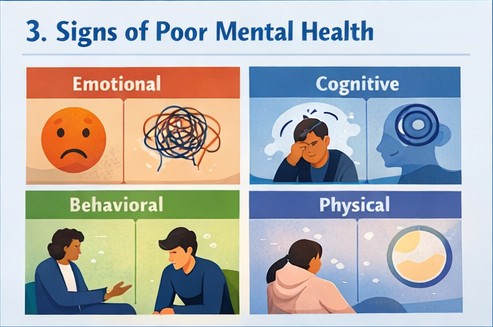
One of the reasons mental health challenges go unaddressed for so long is that the early signs are easy to rationalize. You are just stressed. Everyone feels tired. That is just life. But there is a difference between the normal ebb and flow of emotions and something that needs attention.
Here are warning signs — organized by category — that suggest it may be time to slow down and check in with yourself or a professional.
Emotional Warning Signs
- Persistent sadness, emptiness, or hopelessness that lasts more than two weeks
- Intense irritability or anger that feels disproportionate to the situation
- Excessive worry or fear that is hard to control and interferes with daily life
- Feeling emotionally numb or detached from the things and people you normally love
- Sudden mood swings that feel outside of your control
Cognitive Warning Signs
- Difficulty concentrating, making decisions, or remembering things
- Intrusive or obsessive thoughts that repeat despite your efforts to stop them
- Thoughts of self-harm or suicide — these require immediate professional attention
- A pervasive sense that things will never get better, or that you are a burden to others
Behavioral Warning Signs
- Withdrawing from friends, family, or social activities you used to enjoy
- Neglecting personal hygiene or basic self-care
- Increased use of alcohol, substances, or other numbing behaviors
- Difficulty fulfilling responsibilities at work, school, or home
- Changes in eating habits — significant loss of appetite or emotional overeating
Physical Warning Signs
- Persistent fatigue that sleep does not fix
- Unexplained physical complaints like headaches, stomach issues, or chest tightness
- Significant weight changes in a short period
- Sleep disturbances — insomnia, sleeping too much, or frequent nightmares
Important: If you or someone you know is experiencing thoughts of suicide or self-harm, please contact a mental health crisis line immediately. In many countries, the number 988 (Suicide & Crisis Lifeline) is available 24/7. You are not alone, and help is available.
4. Common Mental Health Disorders: What They Are and How They Differ
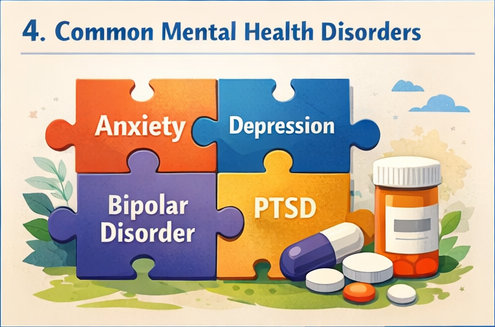
Understanding the landscape of mental health disorders is part of building mental health literacy. Here is an overview of the most common conditions, what they involve, and how they are generally distinguished from one another.
Anxiety Disorders
Anxiety disorders are the most prevalent mental health conditions globally. They include generalized anxiety disorder (GAD), panic disorder, social anxiety disorder, specific phobias, and OCD (obsessive-compulsive disorder). The common thread is persistent, excessive fear or worry that interferes with daily functioning.
Key difference from normal anxiety: Everyone feels anxious before a big presentation or during a health scare. Anxiety disorders are characterized by anxiety that is chronic, hard to control, and disproportionate to the situation — often without a clear trigger.
Depression
Clinical depression (major depressive disorder) is more than feeling sad. It involves a persistent low mood that lasts at least two weeks, along with symptoms like loss of interest in activities, changes in sleep and appetite, fatigue, and often, physical pain. Depression is not a choice or a mindset. It has measurable neurological and physiological underpinnings.
Key difference from sadness: Grief and situational sadness are normal responses to hard events. Depression tends to be longer-lasting, more pervasive, and not necessarily linked to a clear life event.
Bipolar Disorder
Bipolar disorder involves alternating periods of depression and mania (or hypomania). During manic episodes, a person may feel unusually energized, need very little sleep, make impulsive decisions, and feel grandiose. These episodes are followed by depressive lows. The condition exists on a spectrum — Bipolar I and Bipolar II involve different severity levels of manic episodes.
PTSD and Trauma-Related Disorders
Post-traumatic stress disorder (PTSD) can develop after exposure to a traumatic event. It involves flashbacks, nightmares, hypervigilance, and avoidance of reminders of the trauma. Importantly, PTSD is not limited to combat veterans — it can affect anyone who has experienced or witnessed a severely distressing event, including accidents, abuse, medical emergencies, or natural disasters.
Eating Disorders
Anorexia nervosa, bulimia nervosa, and binge eating disorder are serious mental health conditions — not lifestyle choices. They carry some of the highest mortality rates of any psychiatric diagnosis and are closely connected to anxiety, depression, and trauma. Early intervention significantly improves outcomes.
5. Mental Health Treatment Options: What Actually Works
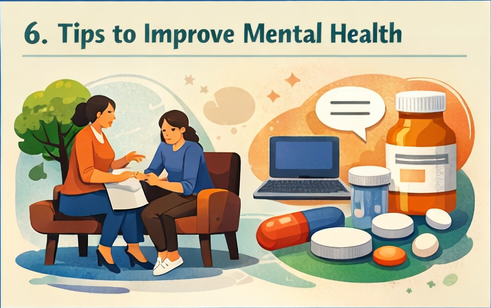
A common misconception is that seeking mental health treatment means years of expensive weekly therapy or a lifetime on medication. The reality is far more nuanced. Treatment is highly personalized, and there is a wide spectrum of effective, evidence-based options available.
Psychotherapy (Talk Therapy)
Therapy remains one of the most effective interventions for most mental health conditions. Several well-researched modalities include:
- Cognitive Behavioral Therapy (CBT): Focuses on identifying and changing unhelpful thought patterns. It is the gold standard for anxiety disorders and depression.
- Dialectical Behavior Therapy (DBT): Originally developed for borderline personality disorder, it is now widely used for emotional regulation, self-harm, and eating disorders.
- EMDR (Eye Movement Desensitization and Reprocessing): Particularly effective for trauma and PTSD.
- Acceptance and Commitment Therapy (ACT): Helps people develop psychological flexibility and act in accordance with their values rather than being controlled by difficult thoughts.
Medication
For many people, medication plays an important — sometimes critical — role in treatment. Antidepressants (SSRIs, SNRIs), mood stabilizers, and anti-anxiety medications can meaningfully reduce symptoms and make therapy more effective. Medication is not a crutch or a shortcut. It is a legitimate medical intervention that works through the same logic as medication for diabetes or hypertension.
When to see a psychiatrist vs. a psychologist: Psychiatrists are medical doctors who can prescribe medication and often handle more complex or severe presentations. Psychologists provide psychotherapy and psychological assessment. Many people see both.
When to See a Therapist
You do not need to be in crisis to benefit from therapy. Therapy is valuable when:
- You notice symptoms lasting more than two weeks
- Your mental state is affecting your relationships, work, or daily functioning
- You are going through a major life transition (divorce, loss, career change)
- You want a dedicated space to develop better emotional skills and self-awareness
- You simply feel overwhelmed and do not know why
Online Therapy and Digital Mental Health Tools
Platforms like BetterHelp, Talkspace, and others have made therapy more accessible than ever. While they are not a replacement for in-person care in all cases, they reduce barriers — cost, geography, stigma — for millions of people. Apps like Headspace, Calm, and Woebot offer additional support between sessions.
6. How to Improve Mental Health: Evidence-Based Daily Habits
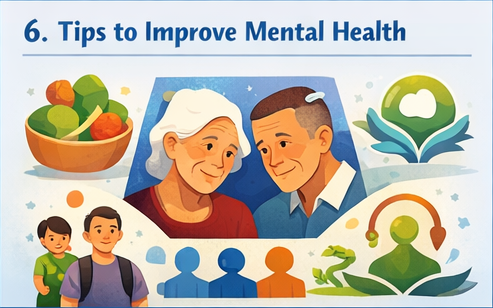
Not everything starts or ends in a therapist’s office. The science on lifestyle factors and mental health is remarkably consistent: what you do with your body directly shapes your mind. Here are the habits with the strongest evidence base.
Exercise and Mental Health
Regular physical activity is one of the most powerful tools available for mental health — and it is free. Exercise increases the production of endorphins, serotonin, and BDNF (brain-derived neurotrophic factor), a protein that promotes neuronal growth and resilience. Multiple meta-analyses have found exercise as effective as antidepressants for mild-to-moderate depression, with fewer side effects.
You do not need to run marathons. A 30-minute brisk walk five days a week is enough to produce measurable improvements in mood, anxiety, and cognitive function. The key is consistency, not intensity.
Sleep and Mental Health
Sleep and mental health have a bidirectional relationship: poor sleep worsens mental health, and mental health conditions disrupt sleep. Chronic sleep deprivation increases cortisol (the stress hormone), reduces emotional regulation capacity, and increases risk for anxiety and depression.
Evidence-based sleep hygiene practices include keeping a consistent sleep schedule, limiting screen exposure in the hour before bed, keeping your bedroom cool and dark, and avoiding caffeine after 2 PM. If you are struggling with persistent insomnia, CBT-I (Cognitive Behavioral Therapy for Insomnia) is the most effective non-pharmacological treatment available.
Nutrition and Mental Health
The gut-brain axis — the bidirectional communication system between your digestive tract and your brain — is a relatively new and genuinely exciting area of research. The microbiome in your gut influences neurotransmitter production, inflammation levels, and stress responses. Diets rich in ultra-processed food, refined sugar, and alcohol consistently correlate with higher rates of depression and anxiety.
The Mediterranean diet (rich in vegetables, legumes, whole grains, fish, and olive oil) has the strongest evidence base for mental health benefits. You do not have to eat perfectly — but you do have to eat intentionally.
Social Connection
Human beings are profoundly social creatures. Loneliness has been classified as a public health epidemic in several countries, and for good reason. Chronic loneliness increases the risk of depression, cognitive decline, and even early death at rates comparable to smoking 15 cigarettes a day.
Quality matters more than quantity. One or two close relationships where you feel genuinely seen and supported provide more mental health protection than dozens of surface-level connections. Investing in those relationships — even when you do not feel like it — is a form of mental health care.
Mindfulness and Stress Management
Mindfulness-based stress reduction (MBSR) and mindfulness-based cognitive therapy (MBCT) have robust evidence supporting their effectiveness for anxiety, depression, and chronic pain. Mindfulness does not mean clearing your mind — it means learning to observe your thoughts and feelings without being overwhelmed by them.
Even five minutes of intentional, focused breathing per day activates the parasympathetic nervous system and measurably reduces cortisol levels. Practices like journaling, time in nature, yoga, and creative pursuits serve similar regulatory functions.
Mental Health in the Workplace
Work is one of the primary contexts where mental health deteriorates or thrives. Psychologically safe workplaces — where people can speak up, make mistakes, and ask for help without fear of judgment — show significantly lower rates of burnout and higher productivity. If you are in a leadership role, modeling mental health behaviors (taking breaks, setting boundaries, acknowledging stress) has an outsized impact on your team.
Know your rights. In most countries, employees are entitled to reasonable accommodations for mental health conditions under disability law. Organizations like the Mental Health Commission of Canada and NAMI (National Alliance on Mental Illness) in the US provide workplace mental health resources.
7. Mental Health Across the Lifespan: Children, Adolescents, and Older Adults
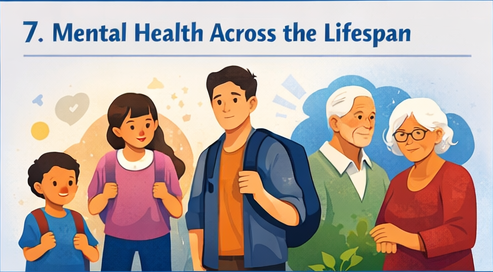
Mental health needs differ by age group — and the earlier concerns are identified and addressed, the better the outcomes.
Children and Adolescents
Half of all lifetime mental health conditions begin by age 14, and 75 percent begin by age 24. Early identification is critical. In children, mental health issues often manifest as behavioral problems, academic decline, physical complaints (stomach aches, headaches), or regression in developmental milestones. Anxiety, ADHD, and depression are the most commonly diagnosed conditions in young people.
Parents and caregivers can support children’s mental health by building open communication, modeling healthy emotional expression, limiting excessive screen time, ensuring adequate sleep and physical activity, and connecting children with professional support when symptoms persist.
Older Adults
Mental health is not just a young person’s concern. Depression and anxiety are common in older adults — often under-recognized and undertreated — frequently linked to chronic illness, loss of independence, grief, and social isolation. Cognitive decline (including dementia) adds another layer of complexity. Maintaining social engagement, physical activity, and purpose is protective throughout the lifespan.
8. Frequently Asked Questions About Mental Health
Q: What is the difference between mental health and mental illness? Mental health refers to everyone’s overall psychological well-being — it is universal. Mental illness refers to specific diagnosable conditions that significantly impair functioning. You can have poor mental health without a diagnosis, and someone with a mental illness can maintain strong overall well-being through treatment and support.
Q: How do I know if I need therapy? Consider therapy if your mood, thoughts, or behaviors are significantly affecting your daily life, relationships, or ability to function at work or school. You do not need to be in crisis. Therapy is also beneficial for personal growth, major life transitions, and building emotional resilience — not just acute mental illness.
Q: Can mental health problems be cured? “Cured” is a complex word in mental health. Many people achieve full remission with treatment and go on to live symptom-free lives. Others manage chronic conditions effectively for years, much like someone manages diabetes or hypertension. Early intervention, consistent treatment, and strong social support significantly improve long-term outcomes for most conditions.
Q: What is the fastest way to improve mental health? There is no single fastest solution, but the most immediate, accessible interventions are physical exercise, quality sleep, and reducing alcohol consumption. These three changes consistently produce measurable improvements in mood within days to weeks. Longer-term habits like therapy, social connection, and nutrition build greater resilience over time.
Q: Is it normal to feel anxious every day? Mild, situational anxiety is a normal part of life. But feeling anxious most days — particularly without a clear cause, or when anxiety interferes with your ability to function — is worth discussing with a healthcare professional. Daily anxiety that feels uncontrollable may indicate an anxiety disorder, which responds well to both therapy and medication.
Q: How can I support someone with a mental health problem? The most important things you can do are: listen without judgment, take their experience seriously (avoid saying “just think positive”), offer practical help, encourage professional support without pressuring, and check in consistently — not just in crisis moments. Educating yourself about their specific condition also helps reduce the chance of accidentally minimizing their experience.
9. Mental Health Resources: Where to Get Help
If you or someone you care about needs support, here are trusted resources:
- NAMI (National Alliance on Mental Illness) — nami.org — helpline, local chapters, education programs
- Mental Health America — mhanational.org — screening tools, community resources
- WHO Mental Health — who.int/mental_health — global statistics and policy resources
- Psychology Today Therapist Finder — psychologytoday.com/us/therapists
- BetterHelp / Talkspace — online therapy with licensed therapists
- Headspace / Calm — guided meditation and mindfulness apps
- Crisis Text Line — text HOME to 741741 (US) for free, confidential support
- 988 Suicide & Crisis Lifeline — call or text 988 (US/Canada), available 24/7
Final Thoughts: Mental Health Is Not a Destination — It Is a Practice
My colleague who came back after three weeks away told me something I have never forgotten: “I thought asking for help was the hardest thing I would ever do. It turned out to be the bravest.” She is now one of the most vocal advocates for mental health in her organization. She runs workshops. She talks openly. She makes it easier for others to do the same.
Mental health is not a destination you arrive at and then stop working on. It is a daily practice, shaped by habits, relationships, self-awareness, and — when needed — professional support. The goal is not to feel good all the time. The goal is to build the resilience and tools to navigate the full range of human experience without losing yourself in the process.
Whether you are currently struggling, supporting someone who is, or simply investing in your own long-term well-being — know that the conversation you are having with yourself by reading this matters. Understanding is always the first step.
This article was written with reference to published guidelines from the World Health Organization, the American Psychological Association, and the Diagnostic and Statistical Manual of Mental Disorders (DSM-5). It is intended for informational purposes only and does not constitute medical advice. Always consult a qualified mental health professional for personal guidance.
Leave a Reply